The Price Tag Is Only the Opening Bid: Whole-Life Costs in Public Infrastructure Contracts

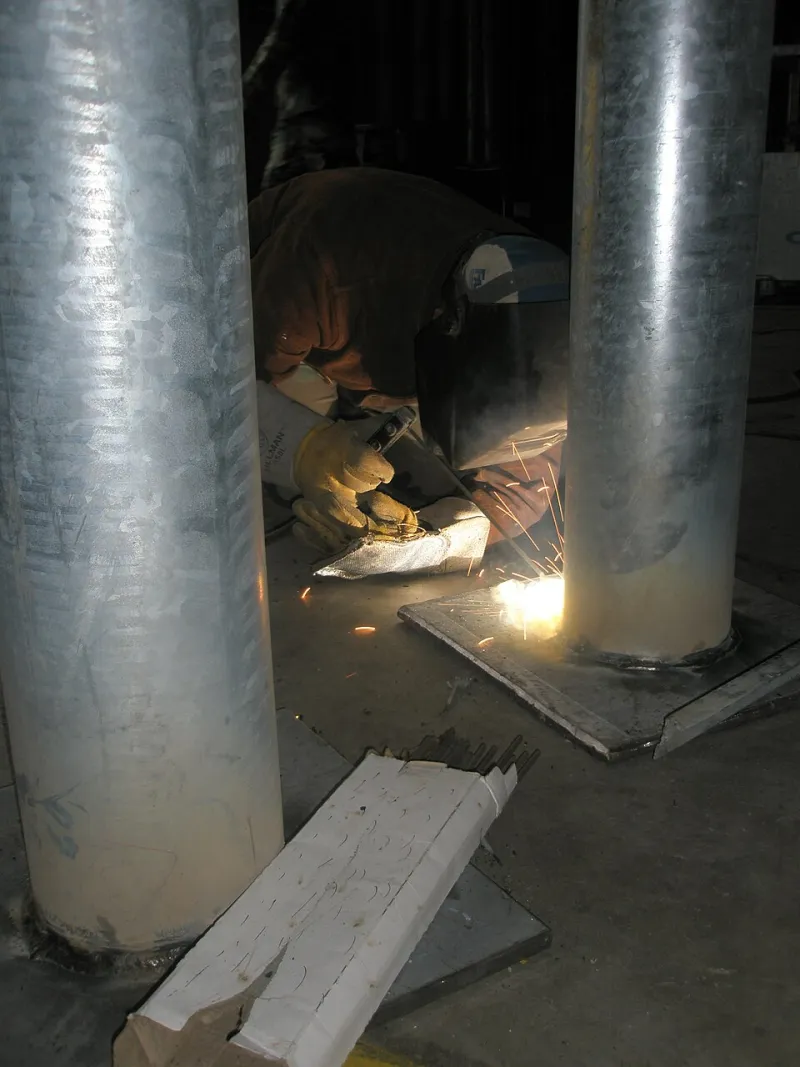
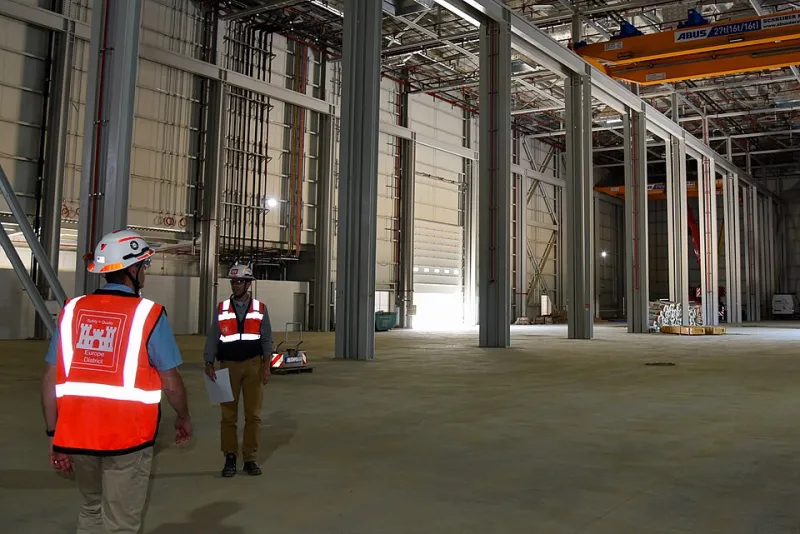
Photo: U.S. Air Force photo by Airman 1st Class Ericka Woolever, Public domain, via Wikimedia Commons
When a council approves a new pumping station, a bridge refurbishment or a district heating network, the figure that goes to committee is almost always the capital cost. It is a tidy number, arrived at through competitive tender, and it fits neatly into a capital programme spreadsheet. What rarely receives the same scrutiny is the second, larger number: the cost of keeping that asset functioning for the three decades or more it is designed to serve.
In mechanical and civil engineering contracts, that second number is written into the small print — and it deserves to be read before signatures are exchanged, not after.
Where the Real Costs Hide
Whole-life costing is not an abstract concept; it is embedded in specific, negotiable clauses. Consider a typical maintenance and operation schedule attached to a mechanical installation. It will define response times for call-outs, the frequency of statutory inspections under LOLER and PSSR, and — crucially — the boundary between what counts as routine maintenance and what counts as a chargeable repair.
That boundary matters enormously. A clause that defines a failed bearing as 'wear and tear beyond normal servicing' can convert a £400 fix into a £15,000 variation. Over a 30-year term, ambiguous drafting of this kind can add multiples to the original contract value.
Other common pressure points include:
- Indexation formulas. A maintenance charge linked to RPI with no cap, compounding annually, will look very different by year 20.
- Spares and exclusivity. Contracts specifying proprietary parts available only from the original installer remove any competitive tension at renewal.
- Availability guarantees. Performance-based contracts can be valuable, but penalties must be proportionate and the measurement methodology agreed in writing.
- Handover obligations. Who owns the asset data, the O&M manuals and the as-built drawings at contract end? A contractor who controls the records controls the exit negotiation.
Lowest Bid, Highest Bill
The instinct in public procurement is understandable: demonstrate value for money by awarding to the lowest compliant bidder. But a tender priced aggressively low on day one is often financed by generous returns on the maintenance tail. Contractors are not charitable; they simply recover their margin later, where the client's evaluation framework was not looking.
The Public Services (Social Value) Act and the 2015 procurement reforms gave authorities wider latitude to weigh lifecycle costing alongside headline price. The Procurement Act 2023 goes further, explicitly encouraging assessment of the most economically advantageous tender across the whole contract period. Authorities that still evaluate on capital cost alone are, in effect, choosing not to look at most of the bill.
A Checklist for Evaluating the Thirty-Year View
Before award, procurement teams should be able to answer the following:
- Has a whole-life cost model been produced for each bidder, covering maintenance, energy, spares and end-of-life, over the asset's design life rather than the contract term?
- Are maintenance rates fixed, capped or indexed — and by which index, with what frequency and ceiling?
- Is the routine-versus-repair boundary defined with examples, not adjectives?
- Are spare parts and technical data unencumbered, allowing competitive servicing after year five?
- What are the exit provisions — transfer of staff under TUPE, data handover, asset condition survey at termination?
- Is there a benchmarking or open-book mechanism for costs beyond year ten, when original pricing is no longer a reliable guide?
- Does the contractor have the balance sheet and workforce to honour a 30-year commitment, or is the contract likely to be novated or sold partway through?
None of this is exotic. It is diligence — the same precision applied to the concrete pour, applied to the paperwork.
Building for the Decades, Not the Handover
At Civmec UK we have long argued that the quality of an infrastructure asset is decided twice: once in the fabrication and once in the drafting. A well-engineered structure with poorly drafted maintenance obligations will still bleed an authority dry. A thoughtfully drafted contract, by contrast, aligns the contractor's incentives with the client's — rewarding reliability, penalising neglect, and keeping the door open to competition throughout the asset's life.
The small print is not an afterthought to the engineering. On a thirty-year horizon, it is the engineering.