Reading Between the Lines: A Council's Guide to Judging Mechanical Engineering Tenders
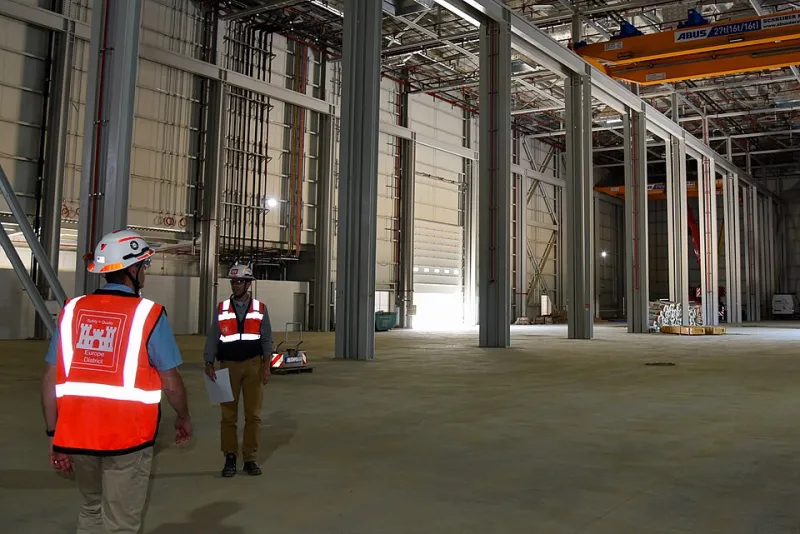
Photo: U.S. Army photo by Christopher Gardner, Public domain, via Wikimedia Commons
For local authorities, commissioning mechanical and civil engineering work carries a particular weight. These are public funds, often tied to essential services — water, waste, transport, energy — and the consequences of a poor appointment are felt by residents long before they appear in a committee report.
Yet tender evaluation frequently rewards the best-written submission rather than the most capable contractor. The following five checks are designed to help officers and elected members look past the prose and assess what genuinely matters.
1. Accreditations That Actually Map to the Work
Most tenderers will list a familiar wall of certifications: ISO 9001, ISO 14001, ISO 45001, CHAS, Constructionline. These are useful baselines — but they are only the starting point, not the differentiator.
The sharper question is whether accreditations match the specific scope. For fabrication-heavy schemes, look for welding qualifications to BS EN ISO 3834 or equivalent execution classes, along with approved weld procedure specifications. For work in live treatment works or operational plant, ask about confined space, water hygiene and high-risk sector-specific training. A contractor whose certifications align precisely with your asset type has demonstrably done this work before; one with a generic portfolio may be stretching beyond their comfort zone at your expense.
2. Safety Performance Beyond the Headline Statistics
Every bidder will state a commitment to safety. The evidence lies in the detail. Ask for three-year accident frequency rates, but also ask what sits behind them: near-miss reporting culture, RIDDOR history, statutory inspection records for lifting equipment and pressure systems, and evidence of behavioural safety programmes on site.
A telling indicator is how a contractor discusses incidents. Firms with mature safety cultures will talk openly about near misses and what changed as a result. Evasiveness on this question deserves as much weight as any statistic.
3. Fabrication Capability — In-House or Subcontracted?
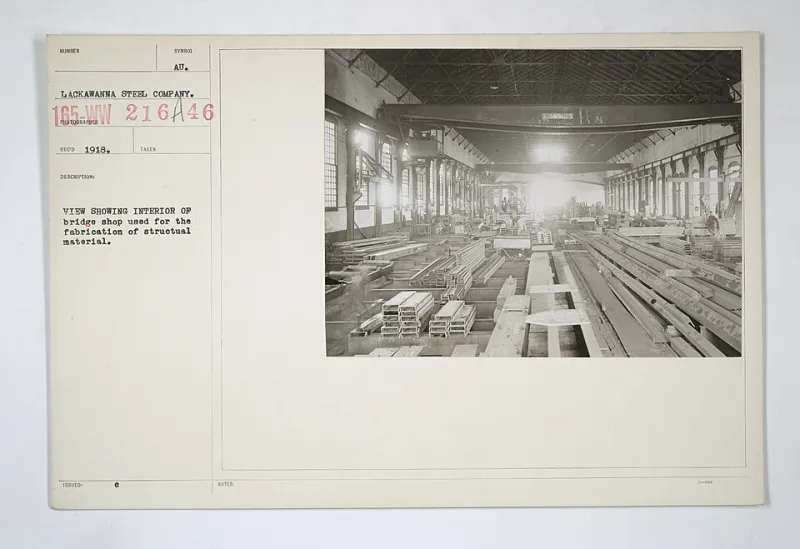
Mechanical engineering quality is substantially determined before site mobilisation, in the fabrication shop. Where a tenderer manufactures its own steelwork, pipework and platework, it retains control of tolerances, weld quality and programme. Where fabrication is subcontracted, interfaces multiply and accountability blurs.
Ask bidders to identify exactly which elements will be fabricated in-house, where, and under whose quality assurance. Request material traceability procedures and details of inspection and test plans. Contractors with genuine fabrication capability will answer in specifics — workshop capacity, lifting limits, testing arrangements — rather than generalities.
4. Evidence of Delivery on Time-Critical Work
Infrastructure schedules rarely forgive slippage. Whether the constraint is a reservoir outage window, a rail possession or a seasonal environmental restriction, the contractor must have delivered against similarly unforgiving deadlines.
Rather than accepting generic case studies, request references for schemes with comparable programme constraints and comparable scale. Contact the named client contacts. Ask three questions: Was it delivered on time? How were problems communicated? Would you appoint them again? The answers to the second question, in particular, reveal more about a contractor than any method statement.
5. Transparency on Commercial and Programme Risk
Finally, examine how the tender handles uncertainty. Does the submission identify programme risks honestly, with sensible mitigation, or does it present an unblemished plan that no experienced engineer would believe? Are rates, day-work arrangements and variation mechanisms clearly set out, or obscured?
A transparent tender is a strong predictor of a transparent contract. Contractors who flag risks and price them openly at bid stage are far more likely to manage them collaboratively once work begins — which, on long-running civil and mechanical schemes, is worth more than a marginal difference in tender price.
Partnership, Not Just Procurement
The public sector increasingly recognises that the best infrastructure outcomes come from early contractor involvement and genuine collaboration, not adversarial tender-to-delivery handoffs. The five checks above are not a barrier to that approach; they are its foundation. A council that understands its bidders' capabilities — and interrogates them fairly — is a client that good contractors actively want to work with.
Choose partners who welcome the scrutiny. The quality of the answer tells you everything about the quality of the work that will follow.