The Two-Hour Audit: What a Footbridge Repair Tells You That a Bid Library Never Will
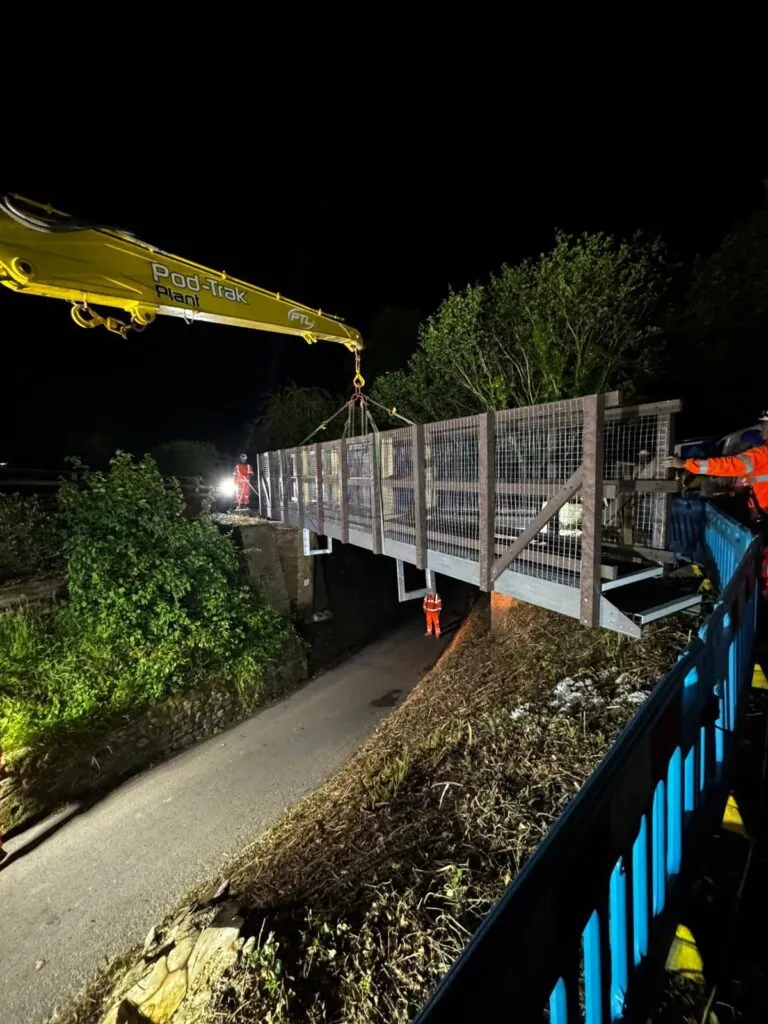
Photo: engineer inspecting pedestrian footbridge repair site UK countryside, via jonessiteservices.co.uk
Every public-sector procurement exercise follows a familiar rhythm. The tender documents arrive bound and polished. The case studies are photographed at golden hour, drone shots sweeping over completed viaducts. The references are, without exception, favourable. And yet, ask any experienced contract manager in a local authority or an arm's-length delivery body what actually predicts performance, and they will rarely point to the bid library.
They will point to the footbridge.
The Case for the Small Job
A £40,000 footbridge refurbishment or a culvert relining on a country lane tells you something no framework submission can: how a contractor behaves when nobody is watching, when the margins are thin, and when the client's own supervision is likely to be a part-time clerk of works with four other schemes on their desk.
The logic is straightforward. Major projects attract a contractor's best people, dedicated QA resources, and senior oversight precisely because the reputational stakes are high. Small works do not. They are staffed from the same pool of operatives, supervisors, and supply chains as everything else — and they reveal the habits, workmanship, and site culture that will surface when the spotlight shifts elsewhere.
A firm that grinds welds flush on a pedestrian parapet nobody will inspect for a decade is a firm that will grind welds flush on your main structure. A firm that leaves a temporary fence sagging into a field margin for six weeks is telling you something about how your project will look in month nine.
What the Bid Documents Cannot Fake
Tender submissions are written. Small sites are lived in. The distinction matters because writing is a skill that can be bought — many firms of any size employ bid professionals whose entire craft is answering selection questions persuasively. Site culture cannot be outsourced.
Consider what is visible on a minor contract that is invisible in documentation:
- Material handling. Are components stored off the ground, protected from weather, or left in a muddy heap at the gate?
- Temporary works. Is the scaffold tagged, tight, and properly founded — or is it the same scaffold that will appear on your site?
- Documentation discipline. Can the site supervisor produce current inspection records without a delay and a phone call to head office?
- How the team treats the public. Footpath diversions signed clearly? A polite word with a passing resident? These behaviours scale.
None of these appear in a quality plan. All of them appear in your project.
The Two-Hour Site Visit: A Practical Checklist
Public-sector clients are entitled to conduct site visits as part of tender evaluation, and few exercise that right on minor works. They should. Two hours, unannounced or at short notice, will yield more than a half-day of framework interviews. We suggest the following structure.
First 30 minutes — arrive and watch. Park beyond the site entrance and walk the public approach. Is the route safe, signed, and considerate of pedestrians and riders? Is the boundary secure and presentable? Note how the site appears before anyone has been warned you are coming.
Next 45 minutes — the work itself. Look at the joints, not the paintwork. Anyone can make a surface look right; the quality lives in connections, fixings, and interfaces with existing structures. On a bridge repair, examine how new steel meets old. On a culvert relining, check the sealing at the terminations — the places water will find first.
Next 30 minutes — ask the supervisor, not the manager. Site supervisors are the most honest people in construction. Ask what has gone wrong this week and how it was resolved. Ask what they would change if the budget doubled. The willingness and fluency of the answer tells you whether problems are surfaced or buried.
Final 15 minutes — the paperwork test. Request the daily diary, the most recent inspection record, and the current risk assessment. A site that can produce these in minutes has embedded systems. One that needs to email head office is relying on memory — and memory does not scale to a £20 million contract.
Reading the Signals Correctly
A caveat is warranted. Small sites are busy places, and even good contractors have bad weeks. The evaluator's task is not to catch a single flaw but to assess patterns. One untidy storage area might be logistics. Untidy storage, an unsigned scaffold, and a supervisor who cannot produce a diary is a system.
It is also worth comparing small-contract performance against the major-project claims in the bid. If the firm promises digital quality management and a dedicated environmental advisor on every scheme, ask why neither is evident on a job down the road. Either the promise is genuine across all work — in which case the small site will show it — or it is reserved for the contracts that win awards.
A Fairer Test Than the Presentation
There is a final argument in favour of the small-contract test, and it is one of fairness. Judging firms purely on glossy major-project portfolios advantages the largest contractors and the most sophisticated bid teams, and it quietly excludes capable regional firms whose strength is exactly the disciplined, unglamorous delivery that small works demand. A client who inspects a footbridge repair is evaluating every bidder on the same terrain: the work itself.
For the contractor, the implication is equally clear. Treat the minor scheme as a shop window, because it is one. The culvert on the B-road is the interview; the framework award is the offer letter.
Public infrastructure is won and lost on habits, and habits are visible long before the big contract starts. The two-hour visit costs almost nothing. The contract it protects may be worth everything.