The Plant Yard Never Lies: Reading a Contractor's Health in Its Machines
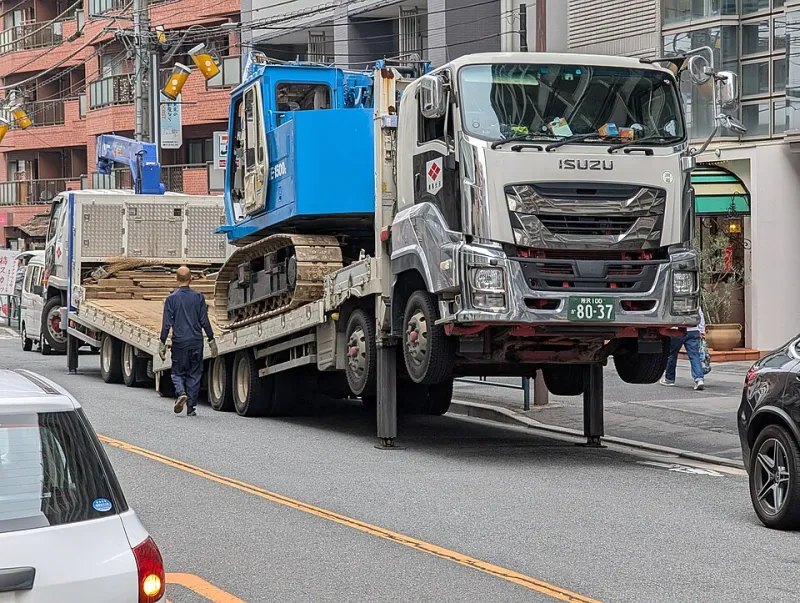
Photo: Syced, CC0, via Wikimedia Commons
Every civil engineering firm ends its projects the same way: the site is handed over, the temporary works come down, and the plant goes home. What happens next — to the 200-tonne crawler crane, the piling rigs, the welding sets and the flatbeds — says a great deal about the business that owns them.
At Civmec UK, we have always taken the view that a firm's plant yard is a more honest document than its balance sheet. The accounts can be arranged; the rust cannot.
The Life Cycle Begins Before the Machine Arrives
Capital equipment strategy starts at procurement, not at decommissioning. A contractor deciding whether to buy or hire a crawler crane is really making a bet about its forward order book. Buying signals confidence in three to five years of work; hiring signals flexibility, but it also means every tender must carry the full cost of someone else's margin.
Firms that buy well tend to buy against a pipeline, not against a single job. The machine is specified so that it can move from a bridges framework in Yorkshire to a water treatment upgrade in the Midlands without modification. Standardising on a small number of makes and models is not fussiness — it halves the training burden, simplifies spares, and makes the fleet genuinely fungible between contracts.
Depreciation Is a Design Decision
Accountants write down plant on a schedule; engineers write it down through use. A machine maintained to a documented regime — hours logged, inspections recorded, minor defects corrected before they compound — will still be earning its keep at fifteen years old. The same crane run into the ground on a poorly managed site can be uneconomic at eight.
This matters to clients more than they might think. When a contractor prices a tender, its plant costs are built on assumptions about residual value and maintenance spend. A firm that has looked after its fleet can price more keenly than one that must recover the cost of neglect. In effect, good maintenance is a subsidy the client receives without ever seeing the invoice.
After the Job Wraps: Refit, Redeploy, Release
When a major mechanical installation finishes, the fleet returns to base and faces one of three fates.
Redeployment. The best outcome. A machine moves directly to the next contract, ideally with only a statutory inspection between sites. This is where standardisation pays off — no retooling, no unfamiliar operators, no lost weeks.
Refit. A machine returning from a demanding job — coastal work is particularly hard on plant — may need structural inspection, hose replacement, and a thorough strip-down of the undercarriage. Refit is where many contractors flinch, because the cost lands in a quiet month with no revenue attached. Firms that cut here are borrowing against their own future.
Release. Sooner or later, everything is sold. The used plant market in the UK is deep and well-informed; buyers inspect with paint thickness gauges and service histories, and they price accordingly. A machine sold with a complete maintenance file can fetch a fifth more than an identical unit without one. Residual value, in other words, is earned through paperwork as much as through paint.
Why This Should Matter to the Client
Public-sector procurement has grown rightly sceptical of glossy bid submissions. But few clients think to ask about plant strategy, even though it is one of the clearest indicators of whether a contractor will still be trading at the end of a five-year framework.
A firm whose fleet is modern, well-documented and visibly maintained is a firm with a forward order book and the cash to service it. A yard full of ageing, mismatched hire replacements suggests a business living contract to contract — and on a long infrastructure programme, that is precisely the risk a client is trying to avoid.
There are practical questions worth asking at tender stage: what proportion of plant is owned rather than hired? What is the average fleet age? Can the bidder evidence a maintenance regime against manufacturer schedules? None of these is intrusive; all are revealing.
The Long View
The crane that outlives its project is not a curiosity — it is the point. Heavy plant bought carefully, maintained honestly and redeployed intelligently is the physical embodiment of a contractor's promise to be here in a decade.
Britain's infrastructure programme will be delivered by firms that think in decades, not quarters. Some of the best evidence of that thinking is parked in a yard just off the A-road, quietly being serviced before the next job begins.