Designing Out the Fall: How Engineering Decisions Are Doing the Work Safety Posters Never Could

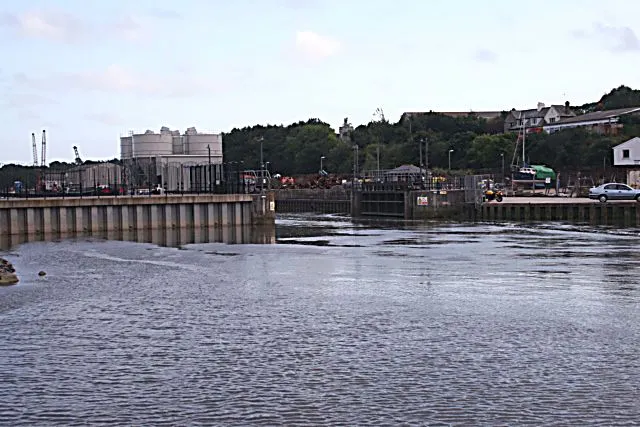
Photo: PEO ACWA, CC BY 2.0, via Wikimedia Commons
Every year, the Health and Safety Executive publishes the same grim statistic: falls from height account for around a quarter of fatal accidents in construction, year after year. Posters, toolbox talks and hard-hat stickers have not shifted that number meaningfully in decades. What has begun to shift it is something quieter and far more structural — the decisions made months before anyone sets foot on site, at a drawing board or in a fabrication workshop.
From Paperwork to Prevention
For most of the modern era, construction safety has been administered rather than engineered. Risk assessments, method statements and permit systems grew into an industry of their own — thorough in intent, but fundamentally reactive. They documented hazards; they rarely removed them.
The design-stage approach inverts that logic. Under the principles embedded in the Construction (Design and Management) Regulations, anyone whose decisions shape a structure carries a duty to eliminate or reduce risk so far as is reasonably practicable. In practice, that means asking a different question at the earliest stage: not how will we work safely at height? but can we avoid working at height altogether?
The distinction sounds semantic. On the ground, it is the difference between a worker clipped to an anchor point at twelve metres and the same worker bolting components together at bench height in a workshop.
Where the Hazards Actually Live
Consider where serious injuries cluster on a typical civil engineering contract. Edge protection during roof and deck installation. Manual handling during assembly. Lifting operations that put people beneath or beside suspended loads. Access scaffolds erected and struck repeatedly as work progresses.
Each of these has a design-stage counterpart:
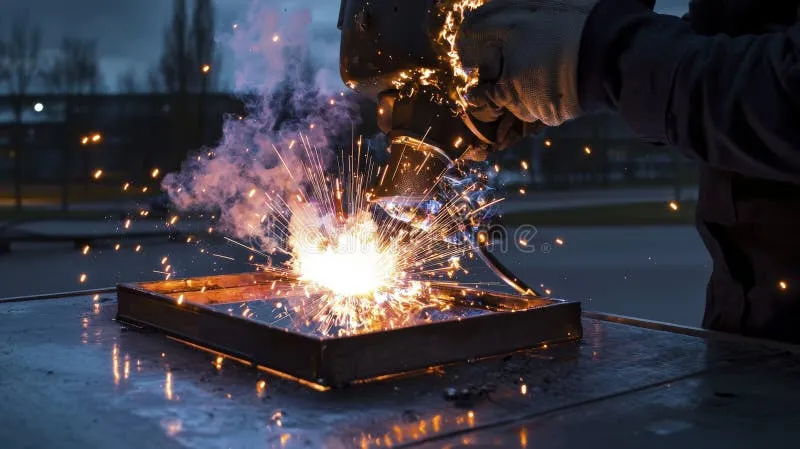
- Modular and off-site assembly. Fabricating stair cores, pipe gantries and steel assemblies in a controlled workshop moves the highest-risk tasks to ground level, indoors, with proper lifting equipment. Site work becomes connection work.
- Lifting strategy as a design input. Specifying component weights and sizes that suit available cranes — rather than discovering mid-project that a 14-tonne assembly needs an unplanned tandem lift — removes an entire category of exposure.
- Permanent access designed in. Walkways, handrails and fall-arrest posts installed as part of the structure, not retrofitted, mean maintenance crews inherit safety rather than improvising it.
- Sequencing. Simply ordering work so that façades close before internal fit-out reduces the time trades spend near open edges.
None of this is exotic. It is ordinary engineering discipline applied to human consequences.
The Two-Metre Reality
There is an old site rule that work above two metres demands fall protection. It survives in practice because so much of construction still happens at height by default — bolted together piece by piece, in the air, in the weather.
The firms leading on safety by design have effectively abolished the rule's relevance on their projects. When a pedestrian bridge arrives as three welded sections and is lifted into place in a single morning, the two-metre threshold is crossed by the structure, not the workforce. When pipework is skid-mounted and pressure-tested in the yard, the confined-space entry that once defined such installations simply never occurs.
This is why the safety record of a contractor is now read less as a measure of site discipline and more as a measure of design capability. A low accident rate on complex work signals a firm that plans risk out upstream, not one that merely supervises it well downstream.
What Public-Sector Clients Should Ask For
For councils, infrastructure bodies and framework operators, the procurement levers are more powerful than any site inspection. Three questions cut to the heart of it:
1. What hazards has the design eliminated? Ask tenderers to identify, specifically, which top-tier risks their methodology removes entirely — not mitigates, removes. Vague references to 'robust safety culture' should be treated as what they are: filler.
2. What proportion of work is done off site? A meaningful off-site fabrication percentage is one of the strongest proxies for reduced site exposure. It also tends to correlate with better quality control and programme certainty.
3. Who attended the design risk workshops — and did site engineers have a voice? Safety by design fails when it is delegated to a consultant's checklist. The insights of the people who will actually build it are the most valuable input in the room.
Clients who embed these questions at tender stage, and weight them in evaluation, consistently get safer outcomes without paying a premium. The cost of a workshop lift study is trivial against the cost of an incident — in human terms, and in the delivery delays and legal exposure that follow.
The Quieter Metric
Britain's construction sector has spent fifty years trying to supervise its way out of its deadliest problem. The evidence now points elsewhere: the projects with the best safety outcomes are those where the dangerous work was designed away before the first spade went in.
That is the real promise of safety by design. Not a poster on the canteen wall, but a bridge deck that never needed a man on its edge. Not a briefing, but a bolt-tightening job done at waist height in a heated workshop in the Midlands. The most effective safety measure on any site is the hazard that no longer exists — and only engineering can deliver that.