While Britain Sleeps: The Overnight Engineering That Keeps Water Moving
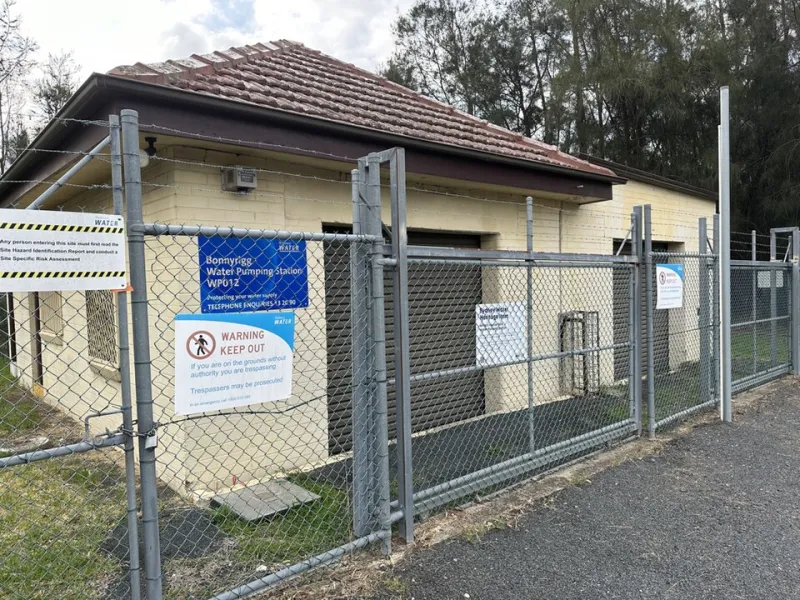
Photo: Chris.sherlock2, CC BY-SA 4.0, via Wikimedia Commons
At 02:40 on a Tuesday morning in February, a duty technician in the West Midlands answers an automated alarm call. A duty rotation on a standby pump at a sewage pumping station has failed to start during a routine test cycle. Nothing has stopped flowing. No customer is affected. And yet, within the hour, a van is on the road.
This is the part of Britain's water infrastructure the public never sees — and, if the engineering holds, never needs to think about. It is also where the real argument about asset care is settled, night after night, in wet wells and motor control rooms across the country.
A System Built on the Assumption of Failure
The defining principle of water infrastructure design is not reliability through perfection, but reliability through redundancy. Duty-standby pump arrangements mean that for every pump doing the work, another sits ready to take the load. Critical sites may carry duty-assist-standby configurations, with two machines running and a third in reserve.
The same philosophy extends through the mechanical chain. Sluice gates have manual overrides. Power supplies carry generators or dual feeds. Control systems are arranged so that a single component failure degrades performance gracefully rather than catastrophically.
None of this redundancy is free. Every standby pump is capital that spends most of its life doing nothing — deliberately. It is engineering honesty in physical form: the acknowledgement that machines fail, seals weep, and bearings wear, and that the measure of good design is not preventing failure but containing it.
The Small Hours Are Not Quiet
Overnight operation at a modern treatment works is a discipline of observation. Flow patterns, chemical dosing rates, blower pressures and pump vibration signatures are monitored from regional control rooms, with telemetry linking thousands of remote sites back to a handful of duty desks.
The night crew's job is fundamentally different from the day crew's. Daytime work is planned: overhauls, refurbishments, mechanical and electrical installation programmes. Night work is vigilance — catching the drift before it becomes the failure. A rising trend in a bearing temperature. A pump that takes a second longer to reach duty. A level sensor reading that doesn't quite match the arithmetic of the inflow.
These are the small deviations that a maintenance regime either catches or ignores. The difference between the two outcomes is measured not in pounds at the moment of detection, but in the six-figure emergency costs that follow a collapsed asset and a pollution incident.
The Economics of Not Being Reactive
There is a persistent temptation, particularly under budget pressure, to treat maintenance as a deferrable cost. The water sector's own history argues otherwise. Emergency repairs consistently cost multiples of planned intervention — often three to five times once mobilisation, out-of-hours working, and consequential damage are counted. That figure excludes the penalties and reputational damage attached to pollution events, which regulators now scrutinise with increasing rigour.
Planned maintenance, by contrast, is scheduleable, costable and improvable. A pump overhaul carried out in a controlled window can be specified, competitively tendered and delivered to a quality standard that an emergency call-out at three in the morning simply cannot match. The mechanical contractor's craft — accurate alignment, correct clearances, properly torqued fixings, welds tested and documented — is only fully available when the work is planned.
For public-sector clients procuring maintenance frameworks, this is the argument to make internally: the choice is never between spending and not spending. It is between spending on your terms and spending on the asset's.
Designing for the Night Shift
There is a further lesson here for anyone commissioning new infrastructure. Assets should be designed not only for their duty, but for their maintenance — and much of that maintenance will happen at night, in confined spaces, in the rain.
Lifting beams positioned where they can actually be used. Access hatches sized for modern equipment. Valves that can be isolated without a confined-space entry. Mechanical layouts that let a two-person crew replace a pump unit in hours rather than days. These decisions cost almost nothing at design stage and repay themselves for the forty-year life of the asset.
At Civmec UK, we take the view that good mechanical contracting is measured by the failures that never happen. The standby pump that starts first time, year after year. The overhaul that keeps a station silent through a decade of storm seasons. The night shift that ends with nothing to report.
Britain's water network will never make headlines for the nights it works perfectly. That, in the end, is the point — and the strongest possible case for looking after it.