Before the Ribbon Is Cut: The Hidden Engineering Behind Britain's Landmark Infrastructure
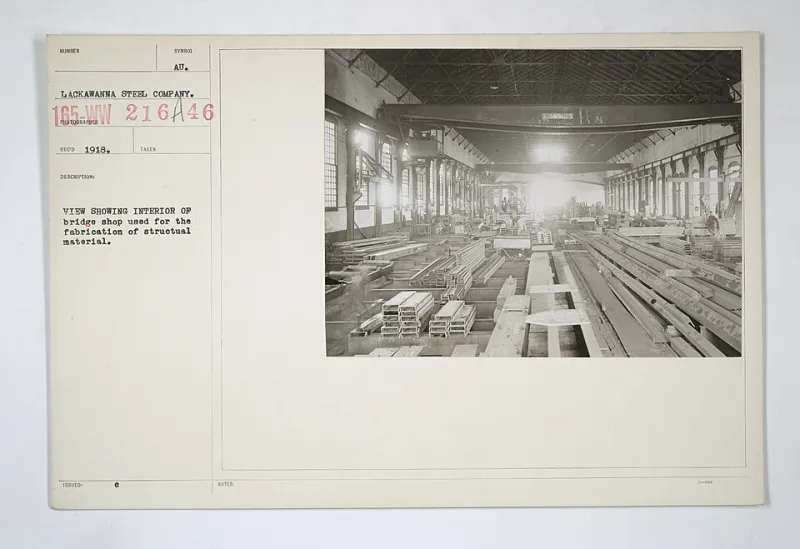
Photo: Unknown authorUnknown author or not provided, Public domain, via Wikimedia Commons
When a new bridge opens or a major industrial facility comes online, the public sees the finished article: painted steelwork, clean concrete, a ribbon and a photograph. What rarely receives attention is the years of disciplined engineering that preceded that moment — the fabrication shops, weld procedures and installation sequences on which the entire scheme quietly depended.
For public-sector procurement teams, understanding this hidden half of a project is not a technical indulgence. It is often the difference between a scheme delivered on programme and one that drifts into delay claims and remedial works.
Where Projects Are Actually Won: The Fabrication Stage
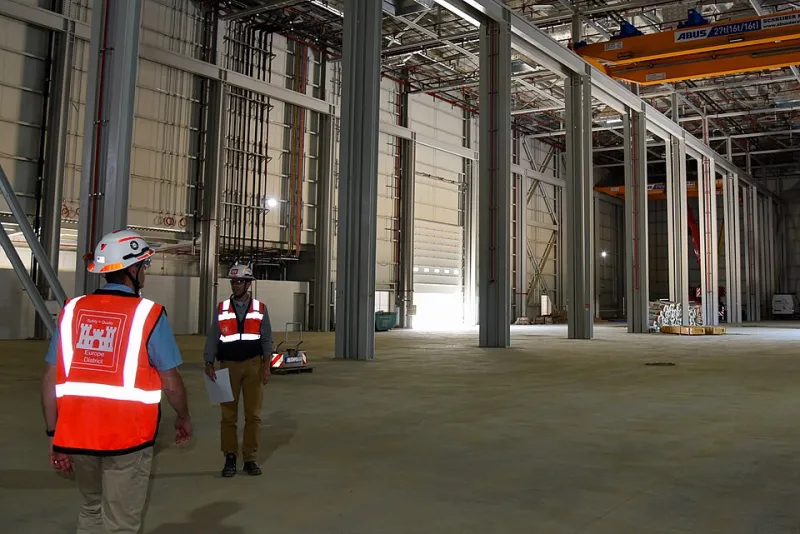
Every large civil engineering project begins its life as steel plate, section and platework. Before anything arrives on site, that material must be cut, formed, fitted and welded into assemblies that will carry loads measured in thousands of tonnes.
Fabrication quality is decided in this window. Dimensional tolerances, weld preparation and distortion control are managed in a controlled workshop environment — conditions that can never be fully replicated once steel is on site. A well-run fabrication yard will operate to recognised execution classes, hold traceable material certificates, and inspect assemblies against approved drawings before anything leaves the gate.
Consider a typical steel bridge span. If the fabricated assemblies drift even a few millimetres out of square across multiple sections, the errors compound. Erection crews inherit problems that no amount of site ingenuity can fully resolve. The lesson is simple: precision at the fabrication stage is not a luxury; it is programme insurance.
Welding: The Most Regulated Craft on Site
Few disciplines in construction are as tightly codified as structural welding, and for good reason. A weld is a permanent joint between load-bearing elements — there is no undo button.
On UK projects of scale, welding is governed by approved weld procedure specifications, qualified welders and independent inspection regimes. Radiographic and ultrasonic testing verify internal quality; visual inspection and hardness checks confirm surface integrity. On safety-critical structures — bridge girders, pressure pipework, heavy mechanical plant supports — this testing regime is non-negotiable.
Procurement teams would do well to ask bidders not simply whether they weld, but how they control it. Who approves the procedures? Where are the welder qualifications held? What proportion of welds is subject to non-destructive testing, and who witnesses it? A contractor who answers these questions fluently is demonstrating a quality culture, not just a certificate.
Mechanical Installation: Sequencing Is Everything
Once fabricated components arrive on site, the mechanical installation phase begins — and with it, the most demanding logistical challenge of many projects. Heavy lifts, confined working windows, live environments and weather all conspire against the programme.
Successful installation is a planning exercise as much as a physical one. Method statements and lift studies are prepared in advance; temporary works are designed and checked; interfaces with civils, electrical and commissioning teams are sequenced so that no trade is waiting on another. On projects such as water treatment upgrades, energy-from-waste plants or rail depot works, the ability to install major mechanical plant within tightly constrained possessions or shutdown windows is frequently the deciding factor in whether a scheme meets its obligations.
The best contractors rehearse these operations. Digital models, trial assemblies and detailed lift plans mean that when the crane is booked and the possession is live, the work proceeds to a rehearsed sequence rather than an improvised one.
What Quality Actually Looks Like from the Contractor's Side
Public-sector clients evaluating major works would be justified in asking what distinguishes a capable heavy engineering contractor from a merely convincing one. In our experience, the markers are consistent:
- Documented traceability. Every structural component can be traced back to its material certificate, weld record and inspection report.
- In-house capability. Fabrication, machining and site installation under one umbrella reduces interface risk and shortens decision chains.
- Investment in people. Coded welders, qualified engineers and ongoing apprenticeship programmes signal a contractor building for the long term.
- Honest reporting. A contractor who raises problems early — a tolerance clash, a delayed delivery — is one who manages risk rather than burying it.
Building Britain, Quietly
Britain's infrastructure renewal — from transport networks to energy and water assets — will be delivered not in ribbon-cutting ceremonies but in fabrication sheds and on night-time possessions across the country. The engineering disciplines applied there, largely unseen, are what make the visible moments possible.
For procurement teams, the invitation is straightforward: look past the renders and the brochures. Ask how the steel will be fabricated, how the welds will be proven, and how the installation will be sequenced. The answers will tell you more about a project's prospects than any artist's impression ever could.